When getting into manual espresso, you quickly realize how many variables can affect a shot. Seemingly minor changes in grind size, pressure, temperature, or puck prep can completely change the result. Because of this, the process of dialing in espresso is one giant experiment, where you make small adjustments, and gradually learn how each variable interacts with one another.
For this post, and my first dialing in process, I chose to use Monarch, an espresso blend from Onyx Coffee Lab. This medium to dark roast is a very well known blend that is designed specifically for espresso. Onyx recommends using 19 grams of beans and brewing 47 grams of espresso. As far as espresso yields go, this is on the larger/longer side.
While that recommendation gives good information and a good starting point, actually achieving good shot is not quite as straight forward, as the dialing in process involves grind size, pressure, and technique. Even after lots of research, I’m still very new to making espresso, so this process has mostly been about experimenting, learning as I go, and of course having fun.

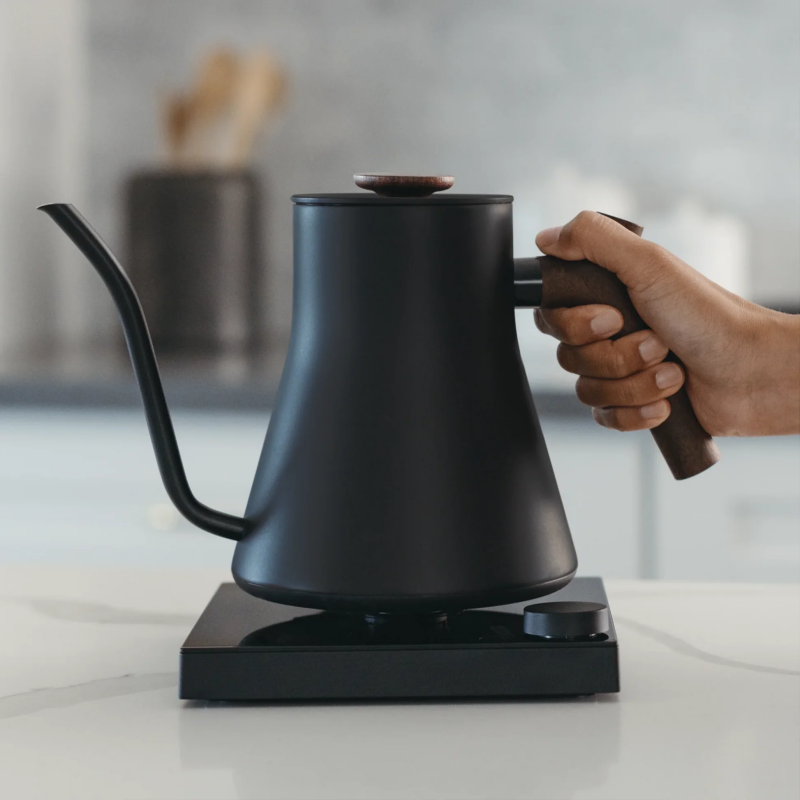
Choosing a starting temperature
The first thing I have to decide when dialing in a coffee is the brew temperature. Monarch is a medium-dark roast, and many espresso resources suggest temperatures somewhere around the low 200 degrees Fahrenheit for coffees like this.
Because of that, I set my Fellow Stagg EKG Pro Studio to 202 degrees with the plan to keep using this temperature while I dial in everything else, so as to not have too many variables changing. From what I’ve read, this temperature should help to extract sweetness and body from a blend like Monarch, but as someone still learning espresso, I’m mostly just using it as an educated guess rather than something I fully understand yet. If the temperature is too high, it can scorch the ground coffee, extracting unwanted flavors.
Learning the Grinder
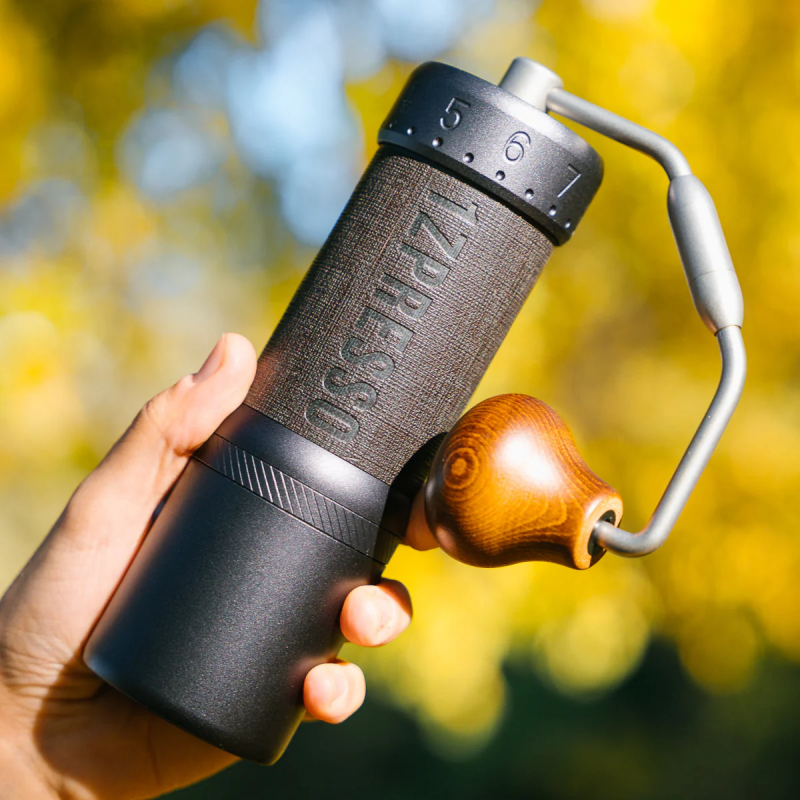
Another incredibly important part of the dialing in process is properly grinding the beans. I'm using the 1Zpresso J-Ultra, a hand grinder specifically designed for espresso, but it can also be used for other brewing methods (that require coarser grinds) like pour-over or drip coffee.
This grinder is useful because of it’s fine and precise adjustments. Each click adjusts the burr spacing by 8 microns (0.008mm). These are extremely small changes. It has 100 clicks per full rotation with 500 clicks in total. This wide range of adjustment offers a level of precision that is helpful for espresso because of how sensitive an extraction is to grind size.
Even a minor change like moving from 1.15 to 1.10 on the grinders dial can noticeably impact extraction speed and other characteristics. If a grind is too coarse, water moves through the coffee too quickly and the shot runs fast. If it is too fine, the water can struggle to pass through the shot making it take too long. Not only impacting the time, the wrong grind size can and will lead to under extraction or over extraction, both of which impact the flavor. Learning how to use this grinder itself has been easier than expected, although I have yet to take it apart and deep clean it, so we shall see how that goes.
My Dialing In Attempts with Monarch
Shot 1
19g in → 40.3g out
31 seconds
Grind: 1.15
Pressure speed: 1.3
This shot flowed relatively ok, but I stopped it’s yield earlier than what Onyx recommends. I wanted to try grinding finer.
Shot 2
18g in → 39.6g out
28 seconds
Grind: 1.10
Pressure speed: 1.4
This shot ran faster than I expected. There are likely user errors involved in this, because it ran faster than the time before, however it lead me to trying an even finer grinds size. I could have been putting too much pressure as well.
Shot 3
18g in → 40.2g out
32 seconds
Grind: 1.05
Pressure speed: 1.2
This shot noticeably slowed down, and is closer to what I am aiming for.
Shot 4
19g in → 41g out
35 seconds
Grind: 1.03
Pressure speed: 1.2
This seems to be my best shot of the group. Its flow looked more stable, although I’m still figuring out what a shot is supposed to look like visually. Even at this point, I haven’t been getting a huge amount of crema. This could be because Monarch might not always arrive extremely fresh, but it could easily be user error, or a combination of other factors including the type of beans used.
The Challenge of Pressure on a Lever Machine
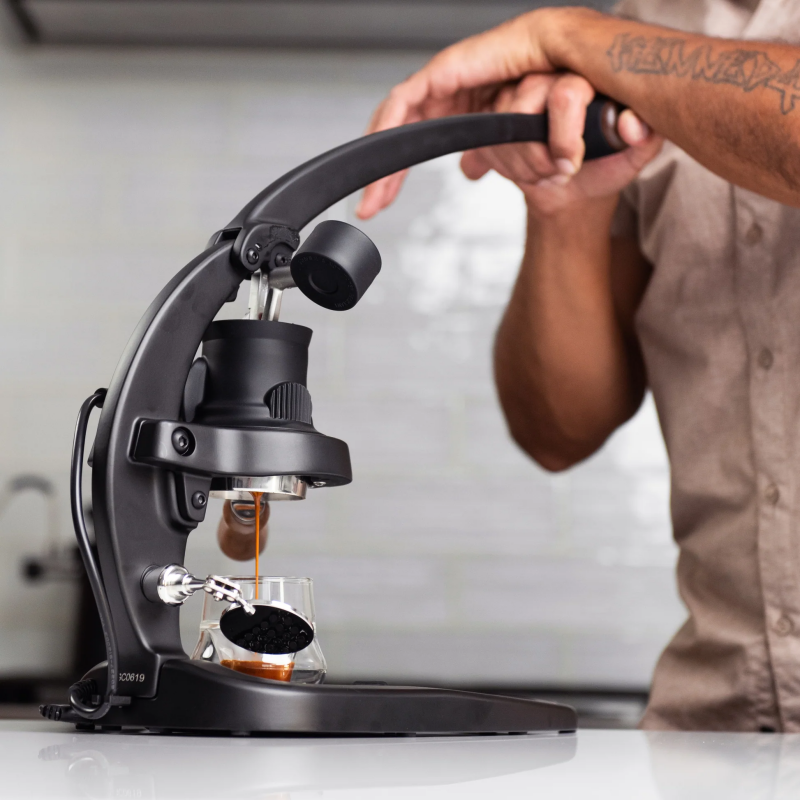
My espresso machine is the Flair 58 Plus 2, a fully manual lever machine. Unlike automatic espresso machines that can regulate pressure internally, my machine relies entirely on myself to apply pressure and the right amount of pressure during a shot. This means even if all other variables are consistent, a shot can vary based on how pressure is applied.
The Flair 58 Plus 2 features a pressure gauge from 0 to 9 bars, helping the user maintain consistency. Oftentimes, you want to do what is called a pre infusion. This involves using a small amount of pressure (usually around 2-3 bars) at the beginning of the espresso pull to infuse the puck, before ramping up to more pressure.
My Current Espresso Workflow
During this introductory process, I have been working on developing a consistent workflow so that there are fewer variables changing between each shot.
First, I heat my water using my Fellow Stagg EKG Pro. This temperature controlled kettle is designed specifically for brewing coffee. At the same time, I preheat my Flair 58 Plus 2’s brew head. This helps to maintain the temperature of the water I pour into the Flair.
Next, I weigh out my coffee beans on my Bookoo Themis Ultra Scale. This larger scale works great for this, as well as other kitchen related tasks.
Once the beans are properly dosed, I lightly spray them with water and shake them up to distribute. This step is called RDT or Ross Droplet Technique. It isn’t necessary, however it helps to reduce static when grinding, lowering retention to the grinder.
Then I grind the beans with the 1Zpresso J-Ultra.
Before adding the grounds, I place a paper filter in the bottom of the portafilter basket and pour hot water over it. From what I’ve read, filtering water through the paper gets rid of the papery taste. Using the paper filter can improve water flow and reduce channeling, and also impact the flavor. My biggest reason for using the paper filter is because studies show it can filter out some of the coffee oils which contain compounds called diterpenes. Some studies have shown consuming large amounts of these can raise LDL or “bad” cholesterol.
Once the grounds are in the portafilter basket, I lightly tap the portafilter to slightly distribute the ground coffee, and then I use the TimeMore Puck WDT Tool to break up clumps and evenly distribute the beans.
After that, I tamp the coffee using the Timemore Puck Tamper, compressing the coffee into a flat and even puck.
After tamping I place a puck screen on top. This thin metal screen can help to distribute water evenly, but mostly just keeps the espresso machine cleaner.
Next, I lock the portafilter into the Flair and pour my hot water into the top.
During my extraction I place a small cup underneath the machine and on top of my smaller scale, the Bookoo Themis Mini Scale. I use this to measure the time, weight, and flow speed of my shot, helping me to monitor the extraction in real time and stop it at the right time.
Where I Am in the Dialing In Process
Although my shots have been improving, I still have a long way to go. Espresso is complex and learning consistency takes time.
I also am far from feeling confident looking for and tasting specific notes, which is helpful in the dialing in process. Most of the drinks I make currently are milk based drinks such as lattes, so that can also make it harder to pick out subtle flavors.
Over time I hope to get better at recognizing subtle flavors, not just to make changes in my brewing, but also to enjoy the coffee more. For now my process is more so about learning my equipment, understanding how the many variables interact, and slowly improving my consistency.
There is still room to further dial in and improve my process for this coffee, but this is where I am right now, and I'm proud of how far I’ve come.
Create Your Own Website With Webador